
Sciatica
Treatment in
Clairemont
Sciatica is pain that travels from the lower back into one leg. Dr. Yossi Stein treats what's irritating the nerve.
Walk-in hours Mon & Wed 9–2, Tue & Thu 1–6, Fri 9–1
5.0 202 Google reviews
Where sciatica starts
Sciatica is a symptom, not a diagnosis. The sciatic nerve runs from the lower back down the leg, and more than one structure can irritate it along the way. Which one is involved changes where care begins.
Disc
A disc can protrude where the nerve exits the spine. This is one of the most common drivers, and it often explains symptoms that travel below the knee. Care addresses the mechanics around that segment to take pressure off the nerve root. More on discs and pinched nerves.
Joint restriction
A restricted joint in the lower back or pelvis changes how that segment moves and irritates the nerve beside it. The pain often sits deep on one side and sharpens when standing up from a chair. The same restrictions show up in lower back pain with no leg symptoms at all.
Deep tissue
Soft tissue along the path of the nerve can restrict and compress it below the spine. Symptoms tend to sharpen with long sitting or driving and ease once you are up and walking. Active Release Technique (ART) addresses that tissue directly.
How far the pain travels matters. Symptoms that stop above the knee frequently come from something other than the sciatic nerve, which is worth establishing before care begins rather than after. We cover that distinction in pain down the leg that is not sciatica.
Some situations call for hospital-level evaluation first. If you're unsure, call and we'll help you route correctly.
Bring me back to life. I thought my sciatic pain will never go away. Thank you Dr Stein.
Rosie S.Just recently connected with Dr. Yossi and he has been an absolute godsend. I've had lingering low back issues… also had tingling in my legs. A few sessions with him and I feel like I can get back into doing all the things I loved before my injury. 10/10 would recommend to all my friends.
Offy K.I went to see Dr. Stein because of pain in my right buttock and thigh. Dr. Stein performed examination very carefully and made adjustments during the first visit. There was not much improvement after the first time. However, I continued to see him twice a week afterward. After two weeks, the symptoms began to improve. The doctor also advised me to exercise at home. Now, the pain symptoms have reduced quite a lot in my right thigh. Dr. Stein is a very dedicated and extremely helpful. Highly recommended.
Tao L.What helps while it settles
Two things make the biggest difference between visits, and one common instinct works against you.
Walk as much as you comfortably can. Walking keeps the spine moving through a neutral range, and it is the most useful thing most patients do on their own while an irritated nerve calms down.
Toe touches and seated hamstring stretches feel like the obvious answer. They pull on a nerve that is already irritated and tend to make the next morning worse.
Hip mobility takes pressure off the lower back, and it is usually where the useful work sits early on. Dr. Stein will show you what applies to your presentation at your visit.
There are a few more things you can do at home while you wait for an opening.

Why here
Dr. Stein went through his own serious injury and recovery, guided by his father, Dr. Richard Stein, who founded the practice in 1991. That recovery is the reason he does this work.
He trained alongside chiropractors with more than thirty years of experience. Every visit is with the same doctor, so what the exam found last time carries into the next one, and the approach moves as the presentation moves.
- 1991
- Founded in San Diego by Dr. Richard Stein
- One doctor
- The same chiropractor at every visit
- Background
- Former EMT and ski patroller
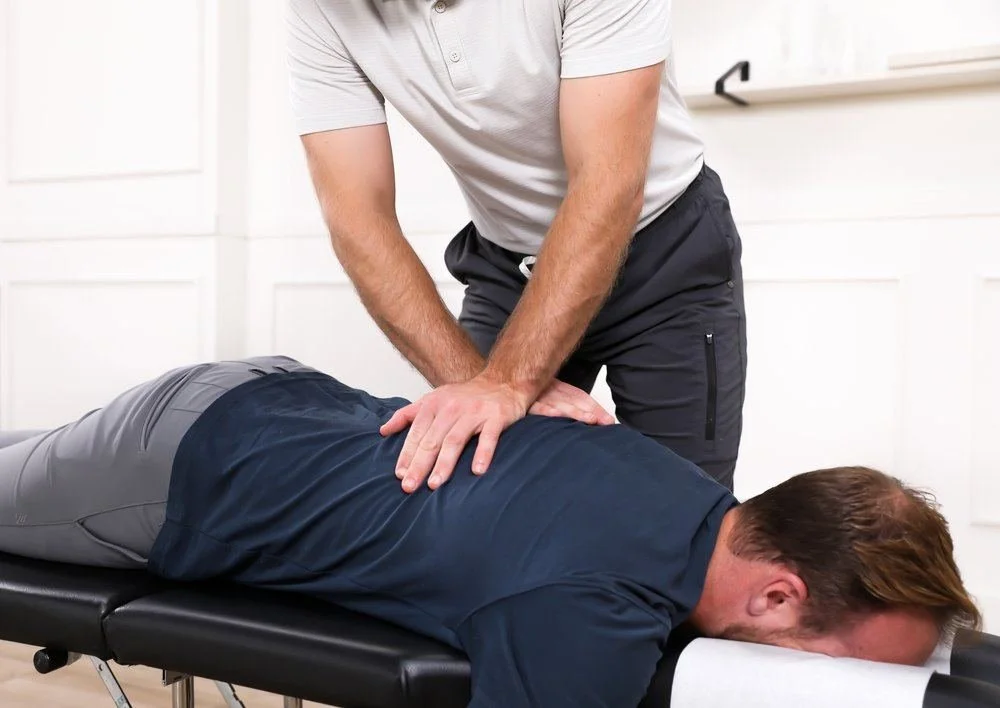
How sciatica gets treated
Three methods, matched to what the nerve and the tissue around it present with on the day you come in.
Chiropractic adjustments
A precise, controlled movement that restores motion to a restricted segment in the lower back or pelvis. Care targets the levels actually involved rather than the whole spine, with the goal of taking pressure off the nerve root.
Joint mobilization
Graded movement, used when a segment is too inflamed or guarded for a full adjustment. That is common early in a flare-up. It restores motion gradually without asking the area to do too much at once.
Active Release Technique
A soft tissue method that addresses restrictions along the path of the nerve below the spine. For symptoms that sharpen with long sitting, it is often the piece adjustments alone leave behind.
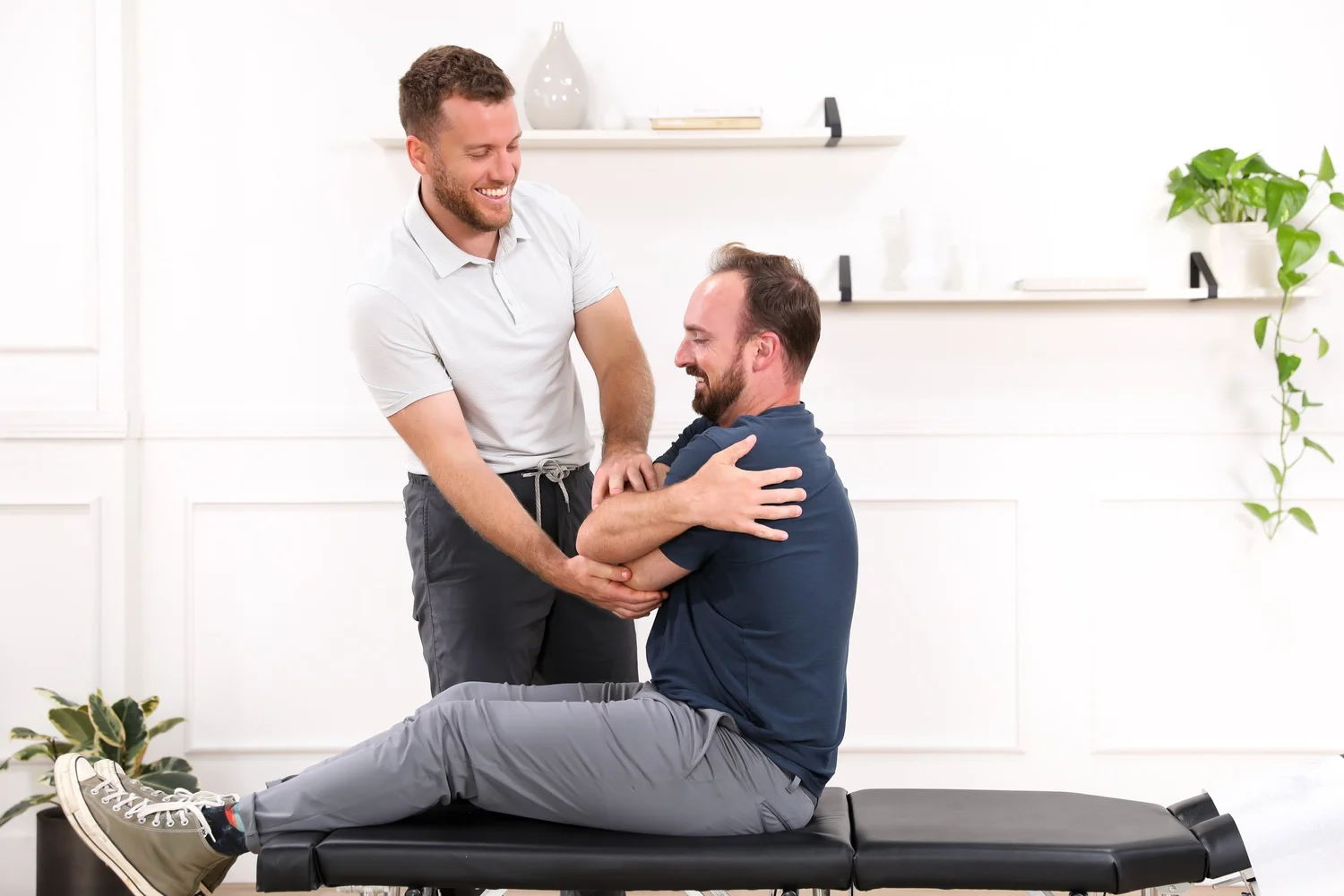
What happens on a first visit
From the door to the table, in three steps.
Call ahead, or walk in
A quick call means a time is ready when you arrive and less of your visit spent waiting. Coming in during open hours works too, and no referral is needed either way.
A focused assessment
A history and movement exam covering where the lower back and pelvis are restricted, how far the symptoms travel, and what the body is guarding against.
Care begins
You hear what the exam found before anything is done, and care starts that same visit when it is the right call. Most first visits run about twenty minutes.
What people ask at the door
Does chiropractic actually do anything for sciatica?
For the mechanical presentations, conservative chiropractic care is a recognized first-line option. The exam is what establishes whether yours is one of them, and you hear that answer the same visit rather than after a plan has been sold to you.
Do I need an MRI or X-rays first?
No. Most sciatica is assessed through history and a movement exam, and nothing needs to be in hand before you are seen. Imaging is reserved for the presentations that call for it, and Dr. Stein will tell you if yours is one.
What if it turns out not to be a chiropractic problem?
Then he says so at the exam and points you toward the right route, which is a better outcome than starting care for something that was never going to respond to it. If the exam shows this isn't something we should be treating, there's no charge for the visit.
What is this going to cost me?
A first visit is $150 and includes the exam. There is no insurance billing, no lien billing, and no invoice arriving weeks later. Follow-up rates and membership options are on how we help.
Walk in when you're ready
If you have been waiting this one out, resting it, stretching it, hoping the leg settles on its own, you have given it a fair try. Call and we'll get you on the schedule, or come in during open hours.
We don't bill insurance. HSA and FSA cards are accepted, and you'll know what the visit costs before any care begins.