
Herniated Disc Treatment in Clairemont
A disc diagnosis sounds bigger than it usually is. Most cases respond to precise, conservative care, and that care starts the day you walk in.
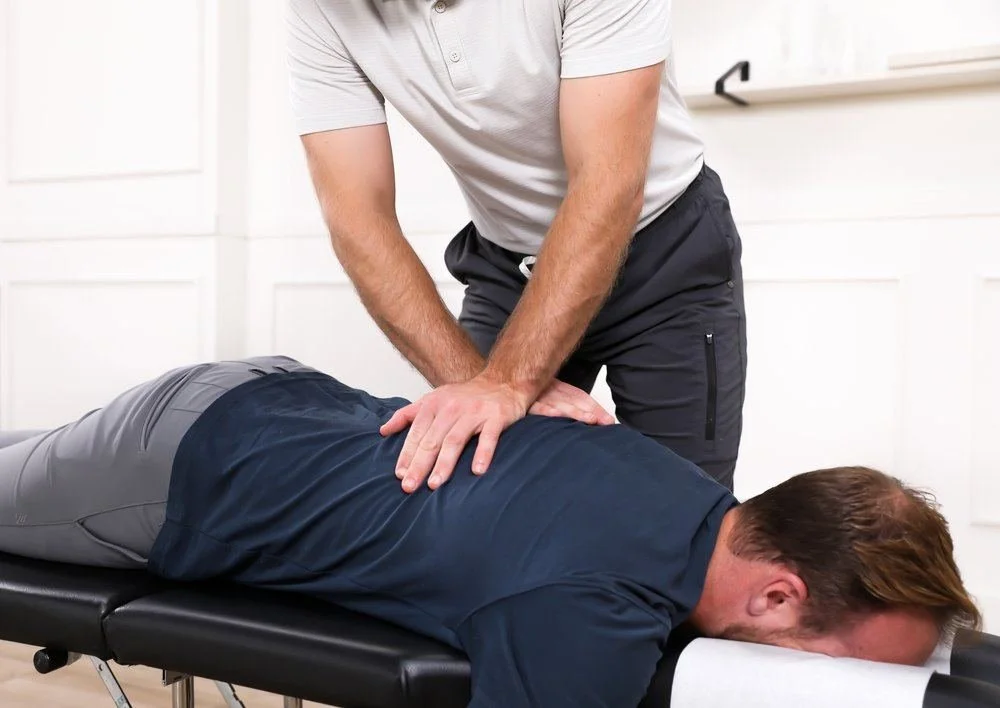
What We Treat
Disc and nerve trouble shows up in patterns. These are the presentations that walk in.
Low Back Disc Pain
A deep, focused ache in the low back that sharpens with sitting, bending, or lifting. The lumbar discs carry the most weight, and they're where most herniations happen.
Sciatic Pain Down One Leg
When disc material presses a lumbar nerve root, pain travels the sciatic line into the leg. Our sciatica care covers this presentation in full.
Neck Disc & Arm Symptoms
Cervical discs pinch nerves that serve the arm and hand. Pain, tingling, or weakness below the shoulder often traces to the neck, not the arm.
Numbness, Tingling & Weakness
A compressed nerve doesn't always hurt. Sometimes it goes quiet: numb patches, pins and needles, a grip or foot that feels unreliable. The exam maps which nerve and which level.
Pain That's Worse Sitting
Sitting raises the pressure inside a lumbar disc. That's why disc pain often builds at the desk and in the car, then eases when you stand and walk. The pattern is a useful clue.
The Back That Keeps Going Out
A back that gives out every few months, from small movements, often has a disc quietly driving the pattern. Care addresses the driver, not the latest episode.

Disc Care From the Patient's Side of the Table
At 22, Dr. Yossi Stein went through a serious injury and a long recovery of his own. He knows what it's like to hear intimidating words about your spine and wonder what they mean for your life. That perspective shapes every disc case here: a careful exam, plain answers, and measured care.
Before chiropractic, he worked as an EMT and ski patroller. His father, Dr. Richard Stein, founded the practice in 1991, and the standard set then still holds: one doctor, every patient, every visit.
Bulging, Herniated, Pinched: How They Connect
Three terms, one mechanism. Knowing where you are on the chain is where a first visit starts.
The Disc Bulges
Each disc is a tough outer ring around a gel-like center. Under years of pressure, the ring can weaken and the disc pushes outward past its normal edge.
The Disc Herniates
When the ring gives way, inner material pushes through. Herniation sounds dramatic, but many are small, and plenty exist without causing any symptoms at all.
The Nerve Gets Pinched
Symptoms start when disc material presses the nerve exiting the spine. Pain, numbness, or tingling then travels wherever that nerve goes.
The exam establishes which step you're at and which level of the spine is involved. Care is matched from there.
How We Treat Disc & Nerve Cases
Measured, precise, and matched to what the exam finds. Three tools carry the work.
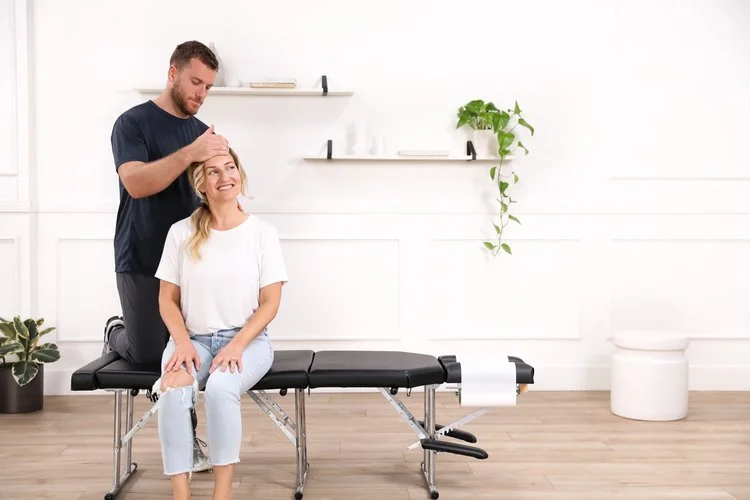

Chiropractic Adjustments
Precise, measured adjustments that restore motion around the involved level and take pressure off the irritated nerve. For disc cases, specificity is everything: the right segment, the right direction, nothing broad.
Joint Mobilization
Gentle, graded movement for acute or inflamed presentations. When a disc is freshly irritated, mobilization restores motion at an intensity the spine can accept that day.
Active Release Technique (ART)
Targeted work for the muscles that guard around a disc problem: the hip flexors, the paraspinals, the deep stabilizers. Settling the guarding lets the joint care hold.
Understanding Herniated Discs & Pinched Nerves
Discs are the cushions between vertebrae, and herniation is most common between 30 and 55, in the low back first and the neck second. Sitting, lifting, and time all contribute. If you're unsure which term fits your case, we wrote a plain-language guide to pinched nerve versus herniated disc.
The goal of care is straightforward: restore motion, take pressure off the nerve, and keep you moving while the disc settles. Most cases improve with conservative care over weeks. We covered the full picture in herniated disc treatment without surgery.
What to Expect
A first visit maps the problem: which level, which nerve, and how your spine is actually moving. Then care starts, that same visit, at the pace your spine is ready for. Dr. Stein explains what he found and gives you a plan going forward.
Three Facts Worth Knowing
The research on disc recovery is more hopeful than most people expect.
Discs can heal.
Many herniations shrink on their own over months as the body reabsorbs the material. Care keeps you moving and comfortable while that process runs.
Surgery is the exception.
Most disc cases respond to conservative care, and surgery is reserved for the few that genuinely need it. Starting conservative costs you nothing.
Pain level isn't damage level.
An irritated nerve can be intensely painful and still respond well to care. Severe pain doesn't mean something is beyond repair.
Real Patients. Real Relief.
From patients who walked in with disc and nerve problems of their own.
Dr. Stein helped me tremendously recover from a strained disc in my lower back. I highly recommend coming here.
I have multiple herniated discs and hip arthritis and Yossi has helped me tremendously with both of those issues. Dr. Stein is a very good listener and is very attentive to patients' needs. Highly recommended!
I had been dealing with a C7/C8 injury for about four months — constant numbness and tingling that radiated down my arms and into my hands. Dr. Stein's approach was not generic or rushed. He tailored care to what my body needed, and that consistent, personalized approach is what helped drive gradual and sustained improvement over time.
The Next Step Doesn't Have to Be Big
A disc diagnosis comes with a lot of big words. The step that starts recovery is small: walk in, get examined, and hear an honest read on what your spine needs.
Or call us: 858.587.7000